
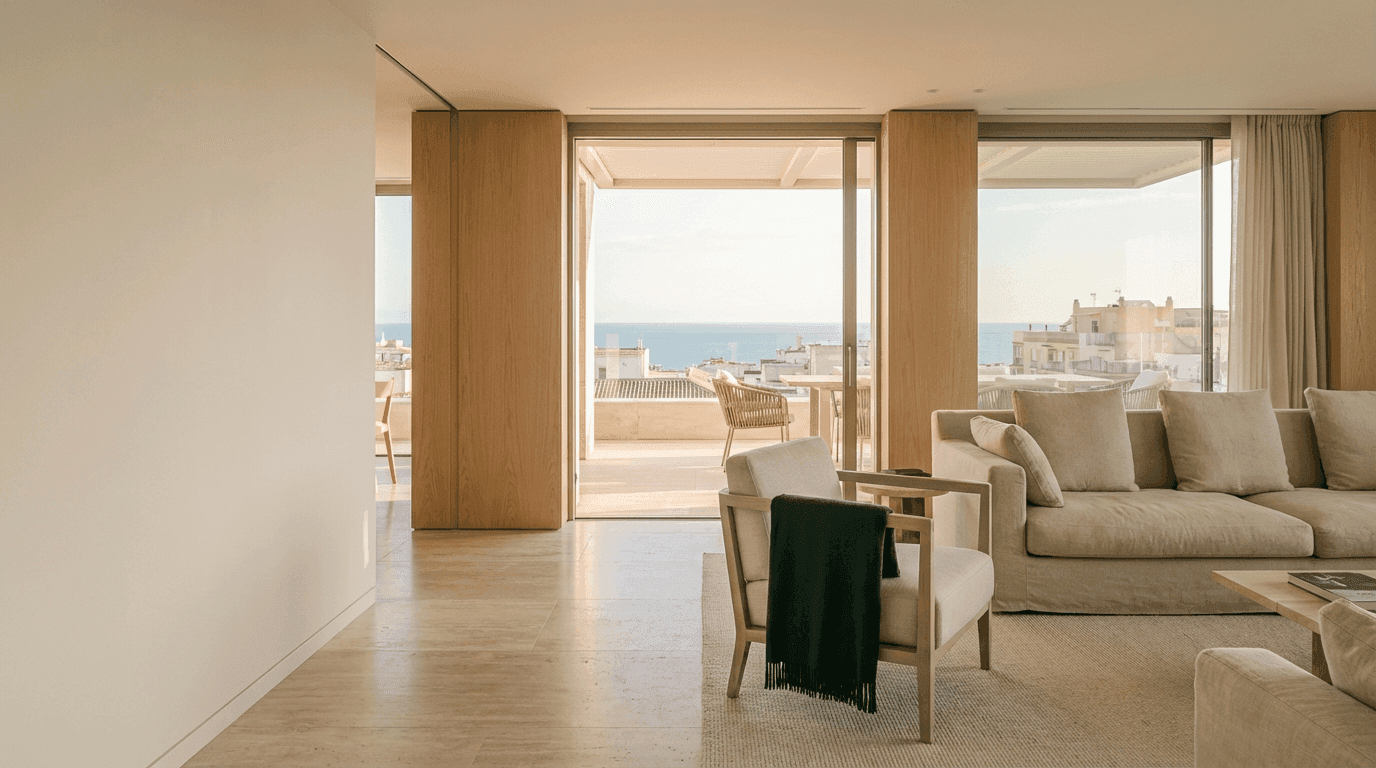
Selling in Centro Histórico: What Buyers Are Usually Looking For
Centro Histórico attracts a specific kind of buyer — someone who wants to live inside the city rather than adjacent to it.
International buyers drawn to Centro are typically looking for walkable density: the ability to step outside and be in the middle of daily life without needing a car. Morning coffee in a plaza, fresh produce from the Atarazanas market, an evening walk along the Alameda, dinner in a restaurant they discover on foot. This is the rhythm they're buying into — and it's the strongest selling point Centro offers.
Remote professionals are a significant part of this buyer pool. They want the plug-in convenience of a turnkey apartment in a neighborhood where everything is within walking distance — cafés to work from, grocery stores, gyms, the waterfront. The Centro Turnkey collection is built around this profile: move-in-ready properties with confirmed fibre internet, workspace-viable layouts, and adequate sound environments. Understanding what that buyer evaluates helps sellers position their property for them.
Second-home buyers also gravitate toward Centro for its lock-and-leave practicality. A well-managed building, a central location with direct access to daily amenities, and a property that can sit empty between visits without concern — these qualities matter to someone who'll use the home several months a year. The second-home buyers guide covers how this profile thinks about the purchase.
Local buyers are part of the picture too — drawn to Centro's cultural life, its density, and the feeling of living in a neighborhood with history and character. The best positioning captures both international and local interest by leading with the property's genuine strengths rather than targeting one audience at the expense of the other.
The Centro Histórico neighborhood guide maps the area in detail — micro-areas, street character, daily rhythm. That context informs every positioning decision.
Positioning a Centro Home for International Demand
Centro's appeal to international buyers is clear. The positioning challenge is communicating what makes your property the right fit within a neighborhood that offers hundreds of options.
Lead with the daily life, not the address. International buyers aren't buying Centro as a concept — they're buying a specific daily rhythm. What's the walk to the nearest coffee spot? How far to groceries? What does the street sound like at 10 a.m. versus 10 p.m.? Denise writes listing descriptions that answer these questions specifically, not generically — because specificity is what builds confidence in a buyer evaluating from abroad.
Clarify the building, not just the apartment. Centro's building stock spans centuries. Some buildings are beautifully maintained with active communities of owners; others have deferred maintenance and uncertain governance. International buyers will ask about communal fees, reserve funds, elevator status, and any planned assessments. Having clear answers — or better, presenting them proactively in the listing — signals professionalism and builds trust.
Frame the renovation honestly. Centro has everything from unrenovated heritage apartments to ground-up contemporary refurbishments. If your property is turnkey, the positioning should make that unmistakably clear — with photography, description, and documentation that communicate move-in readiness. If it needs work, Denise helps frame that honestly too, targeting the buyer who sees renovation in Centro as an opportunity rather than a problem.
Position for the right buyer profile. A compact studio near Plaza de la Merced positions differently than a three-bedroom family apartment near the cathedral. A design-led loft in a former commercial space positions differently than a traditional Andalusian apartment with a patio. Denise identifies which buyer profile each property serves best and builds the positioning around that match. The guide to selling to expats and digital nomads and the guide to selling to U.S. buyers cover how each international segment evaluates properties differently.
Presentation Checklist for Centro Properties
Centro apartments have characteristics that photograph and present differently than properties in newer neighborhoods. A few things matter more here.
Light. Centro streets are often narrow, and lower-floor apartments can be dark. If your property has good natural light — through orientation, floor level, or interior courtyard access — the photography should lead with it. Light is one of the first things international buyers evaluate, and in Centro, it's not guaranteed. If light is limited, Denise frames the property around its other strengths rather than letting photography exaggerate something the buyer will notice immediately during a viewing.
Ceiling height and spatial character. Many Centro buildings have generous ceiling heights, exposed beams, original tile work, or other architectural details. These are assets — they create a sense of space and character that modern apartments can't replicate. The presentation should make these features visible without overstating them.
Sound. Centro is a living neighborhood — streets have energy, especially around key plazas and restaurant zones. If your property is on a quieter street, on a higher floor, or in a building with good sound insulation, that's a specific selling point worth communicating. If it's on a lively street, the positioning acknowledges this and targets buyers who thrive on that energy rather than ones who need silence. Honesty about sound is more effective than letting the buyer discover it themselves.
Building entrance and communal areas. The first impression isn't the apartment — it's the front door, the stairwell, the elevator (or lack of one), and the communal areas. International buyers notice these details and use them to assess building management quality. If the communal areas are well maintained, that's part of the story. If they're not, Denise factors this into the positioning and pricing guidance.
Kitchen and bathroom condition. In Centro's older buildings, these are the rooms most likely to feel dated. They're also the rooms that most influence whether an international buyer perceives the property as turnkey. A current kitchen and functional bathroom can be the difference between a shortlist and a skip. If yours need attention, Denise will recommend whether modest updates would be worth the investment before listing.
Discretion and Buyer Qualification
Centro is a dense, pedestrian neighborhood. Viewings need to be managed with particular care.
Qualified access only. Denise confirms financial capacity, timeline, and genuine intent before any buyer enters your property. This is standard practice, but it matters especially in Centro where buildings are close together and neighbors are observant.
Accompanied viewings, every time. No unaccompanied visits. Denise is present at every viewing, manages the presentation, answers questions with context, and ensures the property is shown consistently with its positioning. In Centro, she also guides the buyer through the immediate neighborhood — pointing out the walk to the market, the nearest café, the evening atmosphere — so the viewing extends beyond the apartment's walls.
Privacy in a dense neighborhood. If you prefer not to list publicly, or if you live in the property and want to limit disruption, Denise can present it to qualified buyers within her network before — or instead of — a public launch. This approach works well in Centro, where word travels quickly within the building.
Structured feedback. After every viewing, you receive specific feedback: what the buyer responded to, what concerned them, and whether they're progressing. This information helps refine the approach if needed — and in Centro, where micro-location matters so much, buyer feedback can reveal positioning adjustments that make a meaningful difference.
How Denise Builds a Calm Launch Plan for Centro Properties
Selling in Centro follows the same structured process as any property Denise represents — but with adjustments for the neighborhood's specifics.
Valuation with neighborhood context. Pricing guidance that accounts for Centro's micro-areas: a renovated apartment on Calle Álamos is a different proposition than one on Calle Larios or a side street near the Thyssen. Floor, orientation, light, building condition, and noise profile all factor in. The valuation process explains how this assessment works.
Positioning around the right buyer. Based on the property's characteristics, Denise identifies the primary buyer profile and builds the listing, photography brief, and channel strategy around them. For many Centro properties, the digital nomads guide provides useful context on what remote professionals specifically evaluate.
Photography planned for Centro conditions. Timing matters — light moves differently through narrow streets, and the best photography windows may be morning or late afternoon depending on orientation. Denise briefs photographers with this in mind, so the images reflect how the property actually feels at its best.
Distribution with international reach. Centro properties with strong positioning attract interest beyond the local market. Denise presents them to her active international buyer network alongside public listing channels — ensuring the property reaches qualified buyers who are specifically looking for this kind of urban life.
Ongoing management. Inquiry screening, viewing coordination, feedback reporting, and strategic adjustments as the market responds. Denise stays involved throughout — not just at launch.
Your Next Step
If you own a property in Centro Histórico and you're considering selling — or just exploring what the market looks like — the first step is a conversation about positioning.
Request a confidential valuation and Denise will assess your property within Centro's specific context — pricing, buyer profile, and a structured plan to bring it to market.
Or book a selling strategy call to start with a conversation. No commitment either way.
Considering other neighborhoods? The selling guides for Soho and Teatinos cover what makes each area distinct for sellers. The Centro vs Soho vs Teatinos comparison provides a broader overview.
Published by Denise Guerrero
FAQ
What types of buyers are typically drawn to Centro Histórico?
International remote professionals who want walkable density and turnkey convenience, second-home buyers who value lock-and-leave practicality, design-conscious buyers drawn to heritage character, and local buyers who want to live in the cultural heart of the city. The Centro neighborhood guide maps the area and its micro-areas in detail.
What makes a Centro home feel "turnkey" to international buyers?
Functional infrastructure (fibre internet, climate control, modern plumbing), current kitchen and bathroom finishes, adequate natural light, and a well-managed building. In Centro, turnkey also means no major surprises in the building's communal finances or maintenance. The Centro Turnkey collection shows the standard these buyers are comparing against.
What should I prioritize before photography and launch?
Decluttering and cleaning come first. Then address anything that undermines the turnkey perception — a dated bathroom fixture, peeling paint, a broken shutter. In Centro specifically, ensuring the apartment is photographed during its best light window makes a significant difference. Denise advises on all of this as part of the valuation.
How do you handle viewings in a busy area while keeping privacy?
All viewings are accompanied, scheduled at specific times, and limited to qualified buyers. In Centro, Denise also manages the neighborhood context — guiding the buyer on a brief walk to show daily amenities and street character, which extends the impression beyond the apartment itself. If you prefer off-market, viewings can be arranged discreetly within a controlled network.
Should I furnish the home for international buyers?
Not necessarily. Most international buyers prefer to furnish themselves. What matters more is that the space is clean, uncluttered, and photographed to show how rooms function — especially any potential workspace. If furnishing would help the photography, Denise may suggest light staging, but this is rarely essential. She advises case by case as part of the valuation process.
How do you describe lifestyle without being "salesy"?
Through specificity. Instead of generic phrases, Denise writes descriptions that name the nearest café, describe the walk to the market, note which direction the morning light enters, and explain what the street sounds like at different hours. This is information, not persuasion — and it's what builds confidence in a buyer evaluating from abroad.
What documents or details should I gather before a valuation?
Property basics: location, size, rooms, condition, and renovation history. If available, the nota simple, energy certificate, and recent community-of-owners minutes are helpful — they give Denise a clearer picture of the property's legal and communal status. These aren't required to start, but having them ready accelerates the process. Request a valuation to begin.
Can you target remote professionals specifically?
Yes. A significant portion of international buyer interest in Centro comes from remote professionals. Denise positions properties for this profile when the apartment's layout, internet infrastructure, light, and sound environment support it. The digital nomads guide covers what these buyers evaluate — and informs how the listing is written.
How do you qualify buyers before scheduling viewings?
Denise confirms financial capacity, timeline, and genuine purchase intent before any viewing. For international buyers, this includes understanding their financing approach and whether they're planning to act within a specific window. Only qualified, serious buyers access your property.
Do you work with off-market strategies?
Yes. Denise can present Centro properties to qualified buyers within her existing network before — or instead of — a public listing. This suits sellers who prefer discretion, want to limit disruption, or want to test interest before committing to a full launch. Contact Denise to discuss whether this approach fits.
How does Centro differ from Soho for buyer appeal?
Centro offers more density, more variety, and more street-level energy. Soho offers a calmer rhythm, a stronger design identity, and proximity to the waterfront. Remote professionals are drawn to both, but for different reasons — Centro for its plug-in convenience and cultural richness, Soho for its creative character and quieter streets. The neighborhood comparison maps the differences in detail.
What's the best next step if I'm exploring selling timelines?
Start with a valuation. It's confidential, there's no obligation, and it gives you a clear picture of where your property sits — pricing, positioning, and what preparation would be worthwhile. Many sellers contact Denise months before they're ready, which gives them more options when the time comes.